



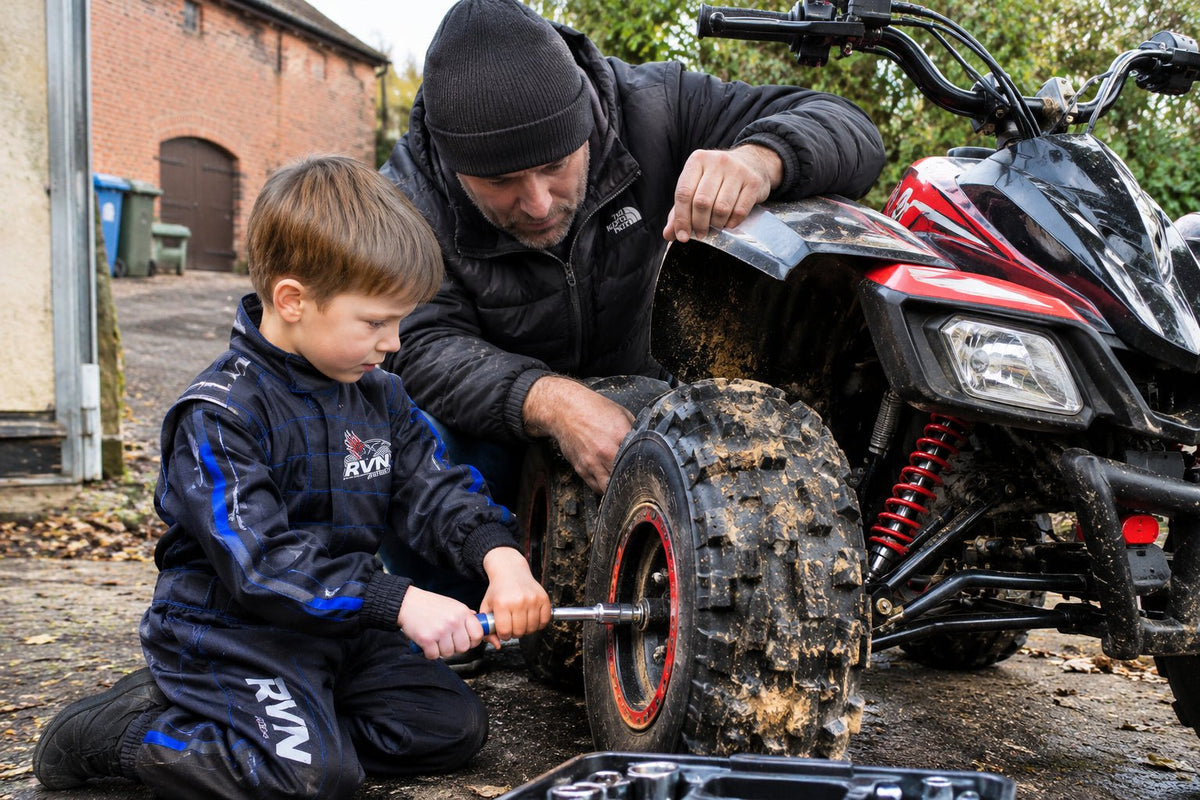
Winter Quad Biking: Mud, Grip & Riding Gear – Your Essential UK Guide
Winter in the UK doesn't have to mean putting your quad bike away until spring. For many off-road enthusiasts, the colder months bring a whole new riding experience, with muddy tracks, challenging terrain and plenty of opportunities to enjoy the great outdoors.
However, British winter weather can be unpredictable. Wet grass, slippery mud, freezing temperatures and shorter daylight hours all create additional challenges for quad bike riders.
Whether you're riding a petrol quad bike, an electric model or helping your children enjoy their first winter adventures, preparation makes all the difference.
At Quad Warehouse, we've put together this practical winter riding guide to help you understand how changing conditions affect your quad bike, what protective equipment you need and how to keep your machine in good condition throughout the season.
1. Understanding Winter Riding Conditions
One of the biggest differences between summer and winter quad biking is the condition of the ground beneath your tyres.
During the colder months, previously firm surfaces can become slippery, waterlogged or covered in fallen leaves.
Common winter riding challenges include:
-
Wet grass: Can provide surprisingly little grip, particularly when braking or turning.
-
Deep mud: Can increase rolling resistance, reduce traction and potentially leave your quad bike stuck.
-
Frozen ground: Can be hard, uneven and extremely slippery.
-
Standing water: Can conceal holes, ruts and other hazards.
-
Fallen leaves: Can hide slippery surfaces, branches and obstacles.
The important thing to remember is that a quad bike's off-road capabilities don't make it immune to losing traction.
If conditions are unsuitable, especially when ice or deep water is involved, postponing your ride is often the safest decision.
For younger or inexperienced riders, choose firm, level ground on suitable private land with the landowner's permission and continuous adult supervision.
2. Check Your Quad Bike Tyres and Grip
Your tyres are one of the most important components when riding in wet or muddy conditions.
They influence how your quad bike accelerates, steers and brakes, particularly when grip becomes limited.
Before heading out, check:
-
Tyre tread for excessive wear or damage.
-
Tyre pressures against the manufacturer's recommendations.
-
Sidewalls for cracks, cuts or deterioration.
-
Wheels for visible damage.
-
Whether the tyres are suitable for the conditions and terrain.
Never assume that lowering tyre pressure will automatically improve winter grip. Incorrect inflation can affect stability, handling and tyre retention.
Our tip: If your tyres are showing signs of wear or damage, replace them with correctly sized, manufacturer-compatible tyres before riding.
For replacement components, explore our Quad Bike Spare Parts Collection.
3. Riding in Mud: Take It Slowly
Let's face it, mud is part of the fun of off-road riding.
But there's a difference between enjoying a muddy adventure and getting into difficulty because the ground is unsuitable.
When riding on wet or muddy surfaces:
-
Reduce your speed and avoid sudden acceleration.
-
Allow more distance for braking.
-
Use smooth steering and throttle movements.
-
Avoid sharp turns and abrupt changes of direction.
-
Keep away from deep ruts, steep slopes and unknown water depths.
-
Never attempt to ride through water or mud that could exceed your quad bike's permitted limits.
If your wheels begin to spin or the quad bike loses traction, avoid aggressively applying more throttle.
Instead, follow the manufacturer's instructions for safely stopping and recovering your machine.
Remember: Four wheels and off-road tyres don't guarantee stability. Quad bikes can overturn, particularly on slopes, uneven ground or when cornering too quickly.
4. Winter Quad Bike Clothing: Stay Warm and Protected
British winter weather can turn a short outdoor adventure into a cold and uncomfortable experience if you're not wearing the right clothing.
But staying warm isn't the only priority. Proper protective equipment remains essential.
Helmet and eye protection
Always wear a correctly fitting, approved helmet suitable for quad biking.
Goggles or compatible eye protection can help protect against mud, wind and flying debris while maintaining clear vision.
Riding gloves
Cold hands can reduce dexterity and make operating the controls more difficult.
Choose protective riding gloves that fit correctly, provide suitable grip and allow you to operate the throttle and brakes comfortably.
Protective jackets and trousers
Wear appropriate protective riding clothing, with warm layers underneath when necessary.
Avoid loose scarves, dangling drawstrings or bulky clothing that could interfere with the controls or become caught in moving components.
Proper riding boots
Sturdy, over-the-ankle riding boots provide important protection and support.
Avoid ordinary trainers or footwear with inadequate ankle protection.
Children's winter riding equipment
Children are particularly vulnerable to becoming cold and uncomfortable during winter activities.
Make sure their clothing fits correctly, doesn't restrict movement and provides suitable protection.
Keep riding sessions short and supervise children continuously.
Explore our Quad Bike Accessories and Protective Riding Gear, including helmets, goggles, gloves and protective clothing.
You can also read our Basic Quad Bike Clothing Safety Guide for more advice.
5. Electric Quad Bikes in Cold Weather
Electric quad bikes are a popular choice for younger riders and families, particularly because many models offer quieter operation and straightforward controls.
However, colder temperatures can affect battery performance and available riding time.
To help protect your electric quad bike during winter:
-
Follow the manufacturer's recommended battery storage temperature.
-
Never charge a frozen battery.
-
Use the correct charger supplied or approved for the model.
-
Charge in a suitable dry, ventilated environment.
-
Keep electrical connections clean and protected from moisture.
-
Avoid leaving batteries in unsuitable freezing conditions.
-
Never leave batteries charging unattended.
It's also worth remembering that reduced battery performance can shorten riding sessions, so don't rely on the same range or running time you might experience in warmer weather.
For further advice, read our Winter Electric Quad Bike Battery and Charging Guide.
6. Petrol Quad Bikes: Winter Maintenance Matters
Petrol-powered quad bikes also benefit from additional attention during colder weather.
Moisture, mud and low temperatures can place extra demands on mechanical components.
Before riding, inspect:
-
Engine oil levels and condition.
-
Correct coolant and antifreeze protection, where applicable.
-
Fuel system condition.
-
Battery and electrical connections.
-
Brakes and cables.
-
Chain condition and lubrication.
-
Air filter condition.
Always use the oils, lubricants and replacement parts recommended for your particular model.
Never run a petrol quad bike inside an enclosed garage or shed. Exhaust fumes contain carbon monoxide, which can be fatal.
For additional guidance, visit our How to Maintain Your Quad Bike article.
7. Cleaning Your Quad Bike After a Muddy Ride
A muddy quad bike might look like proof of a great adventure, but leaving dirt and moisture on your machine can lead to unnecessary wear and corrosion.
After winter riding, it's worth spending a little time cleaning and inspecting your quad.
Step 1: Allow the quad bike to cool
Never direct cold water onto hot engine or exhaust components.
Step 2: Remove loose mud
Use a soft brush and suitable cleaning products to remove mud from accessible areas.
Step 3: Clean carefully
Follow the manufacturer's washing instructions. Avoid directing high-pressure water towards bearings, electrical components, seals or the air intake.
Step 4: Inspect moving parts
Check the chain, suspension, brakes and other exposed components for trapped debris or signs of damage.
Step 5: Dry and protect
Allow the quad bike to dry thoroughly and lubricate suitable components according to the service manual.
Our tip: Cleaning your quad bike after every muddy outing makes it easier to identify potential problems before your next ride.
You can also explore our Seasonal Quad Bike Maintenance Guide.
8. Don't Forget the Shorter Winter Days
One of the easiest things to overlook during winter is how quickly daylight disappears.
A ride that begins in reasonable conditions can become considerably more challenging as the light fades.
Before heading out:
-
Check sunset times and the weather forecast.
-
Choose a riding location with good visibility.
-
Avoid riding in fog or heavy rain.
-
Make sure any fitted lighting works correctly.
-
Allow plenty of time to finish before darkness.
-
Tell someone where you're riding and when you expect to return.
Never assume that fitted lights make a quad bike suitable for public-road use or safe to ride in darkness.
If you're riding with children, keep sessions within daylight hours and maintain direct supervision throughout.
9. Know When It's Better Not to Ride
Winter riding can be great fun, but certain conditions make off-roading unnecessarily hazardous.
Consider postponing your ride if:
-
The ground is covered in ice.
-
Snow conceals hazards or affects visibility.
-
There is significant flooding or deep standing water.
-
Strong winds or poor visibility create additional risks.
-
The ground is too steep, unstable or slippery.
-
Your quad bike has a mechanical fault.
-
The rider is cold, tired or struggling to maintain control.
There's always another opportunity to enjoy your quad bike when conditions improve.
10. Your Winter Quad Bike Checklist
Before your next winter adventure, take a few minutes to complete these essential checks.
-
Check tyre pressures, tread and condition.
-
Inspect brakes, throttle and steering.
-
Check oil, coolant and other applicable fluids.
-
Inspect the chain and accessible moving parts.
-
Check battery charge or fuel level.
-
Wear a helmet and suitable protective equipment.
-
Choose a safe, permitted off-road riding location.
-
Check weather, ground conditions and daylight.
-
Arrange appropriate supervision for younger riders.
-
Clean and inspect the quad bike after riding.
A little preparation can help protect your quad bike, avoid unnecessary breakdowns and make your winter riding experience more enjoyable.
Keep the Adventures Going This Winter with Quad Warehouse
Winter doesn't have to mean the end of your off-road adventures.
With sensible riding decisions, the right protective clothing and regular maintenance, you can continue enjoying your quad bike throughout the colder months whenever conditions are suitable.
Whether you're preparing a child's electric quad bike, maintaining a petrol-powered junior model or looking for replacement components and riding equipment, Quad Warehouse is here to help.
Explore our range of Quad Bikes, Riding Gear and Accessories and get your machine ready for the season ahead.
Quad Warehouse – Your Off-Road Adventure Starts Here!


